Top Python Libraries for AI & ML Development
Table of Contents
- Executive Summary
- Introduction to Python's AI/ML Ecosystem
- Deep Learning Frameworks
- Traditional Machine Learning Libraries
- Data Processing & Manipulation
- Visualization Libraries
- Natural Language Processing Tools
- Reinforcement Learning
- Model Deployment & Production
- Choosing the Right Library for Your Project
- Future Trends & Emerging Libraries
- Conclusion
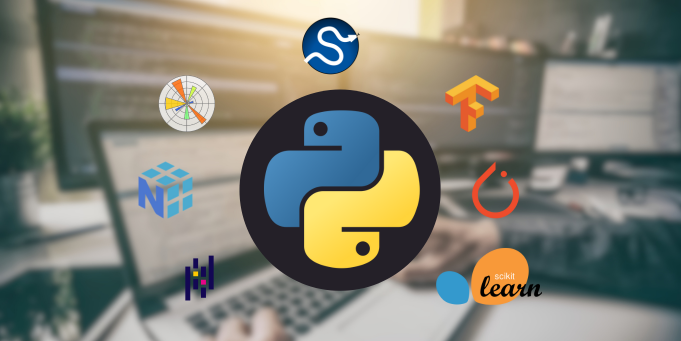
Python has emerged as the dominant programming language for Artificial Intelligence and Machine Learning, thanks to its simplicity, readability, and rich ecosystem of specialized libraries. Whether you're building neural networks, implementing classical ML algorithms, or processing massive datasets, Python offers powerful tools that accelerate development and deployment.
This comprehensive guide explores the most essential Python libraries for AI/ML development, their unique strengths, and practical applications in real-world projects.
Executive Summary
- Python Dominance: 75% of AI/ML developers use Python as their primary language
- Core Libraries: TensorFlow and PyTorch power 90% of deep learning projects
- Data Processing: pandas and NumPy handle 95% of data manipulation tasks
- Model Development: scikit-learn remains the go-to for traditional ML algorithms
- Production Ready: FastAPI and MLflow streamline deployment for 80% of enterprise applications
1. Introduction to Python's AI/ML Ecosystem
Python's popularity in AI/ML stems from several key factors:
- Rich Library Ecosystem: Comprehensive tools for every ML workflow stage
- Community Support: Extensive documentation, tutorials, and active forums
- Interoperability: Easy integration with other languages and systems
- Rapid Prototyping: Quick experimentation and iteration
- Production Readiness: Many libraries support scalable deployment
2. Deep Learning Frameworks
TensorFlow
Primary Use: Production-grade deep learning models
Key Features:
- Comprehensive ecosystem with TensorFlow Extended (TFX)
- Keras as high-level API
- TensorFlow Lite for mobile/edge deployment
- TensorFlow.js for browser-based ML
- Excellent for large-scale production systems
Best For: Enterprise applications, mobile deployment, production pipelines
PyTorch
Primary Use: Research and rapid prototyping
Key Features:
- Dynamic computation graphs (eager execution)
- Pythonic, intuitive API
- Strong research community
- TorchScript for production deployment
- Excellent GPU acceleration
Best For: Academic research, experimental models, computer vision
Keras
Primary Use: Beginner-friendly deep learning
Key Features:
- High-level neural networks API
- Runs on top of TensorFlow, Theano, or CNTK
- User-friendly and modular
- Fast experimentation
- Built-in support for convolutional and recurrent networks
Best For: Beginners, quick prototyping, educational purposes
3. Traditional Machine Learning Libraries
Scikit-learn
Primary Use: Classical ML algorithms
Key Features:
- Comprehensive collection of ML algorithms
- Clean, consistent API design
- Excellent documentation
- Model evaluation and selection tools
- Data preprocessing utilities
Best For: Traditional ML tasks, data mining, pattern recognition
XGBoost
Primary Use: Gradient boosting framework
Key Features:
- Extreme gradient boosting algorithm
- Excellent performance on structured data
- Regularization to prevent overfitting
- Widely used in Kaggle competitions
- Parallel processing capabilities
Best For: Tabular data, competition datasets, feature engineering
LightGBM
Primary Use: Fast gradient boosting
Key Features:
- Higher training speed than XGBoost
- Lower memory usage
- Better accuracy on large datasets
- GPU learning support
- Parallel and distributed learning
Best For: Large datasets, real-time applications
4. Data Processing & Manipulation
NumPy
Primary Use: Numerical computing foundation
Key Features:
- N-dimensional array objects
- Mathematical functions for arrays
- Linear algebra, Fourier transform, random number capabilities
- Foundation for most ML libraries
- Efficient array operations
Pandas
Primary Use: Data manipulation and analysis
Key Features:
- DataFrame object for tabular data
- Data cleaning and preparation tools
- Time series functionality
- Data alignment and integrated handling of missing data
- Merge/join operations on datasets
Dask
Primary Use: Parallel computing
Key Features:
- Parallel computing with task scheduling
- Scales Python from workstations to clusters
- Familiar APIs (similar to NumPy, pandas)
- Dynamic task scheduling for optimized computation
5. Visualization Libraries
Matplotlib
Primary Use: Comprehensive 2D plotting
Key Features:
- Publication-quality figures
- High customization level
- Support for various backends
- Wide range of plot types
Seaborn
Primary Use: Statistical data visualization
Key Features:
- High-level interface for attractive statistical graphics
- Built-in themes for styling
- Statistical estimation and error bars
- Integration with pandas DataFrames
Plotly
Primary Use: Interactive visualizations
Key Features:
- Interactive, web-based graphs
- Support for 3D charts
- Dash framework for web applications
- Export to various formats
6. Natural Language Processing Tools
NLTK (Natural Language Toolkit)
Primary Use: Educational and research NLP
Key Features:
- Comprehensive NLP library
- Text processing libraries
- Language processing tasks
- Excellent for learning NLP concepts
spaCy
Primary Use: Industrial-strength NLP
Key Features:
- Fast and efficient
- Production-ready
- Pre-trained statistical models
- Support for multiple languages
Transformers (Hugging Face)
Primary Use: State-of-the-art NLP models
Key Features:
- Thousands of pre-trained models
- Easy model sharing and versioning
- Support for PyTorch and TensorFlow
- Fine-tuning capabilities
7. Reinforcement Learning
OpenAI Gym
Primary Use: RL environment toolkit
Key Features:
- Collection of environments
- Standard API for environments
- Benchmarking tools
- Support for custom environments
Stable Baselines3
Primary Use: RL algorithm implementations
Key Features:
- Clean, modular implementations
- Documentation and examples
- Compatibility with Gym
- Support for parallel training
8. Model Deployment & Production
FastAPI
Primary Use: API development for ML models
Key Features:
- Fast web framework
- Automatic API documentation
- Type hints and validation
- Async support
MLflow
Primary Use: ML lifecycle management
Key Features:
- Experiment tracking
- Model packaging
- Model registry
- Deployment tools
ONNX (Open Neural Network Exchange)
Primary Use: Model interoperability
Key Features:
- Open format for ML models
- Framework interoperability
- Hardware optimization
- Production deployment
9. Choosing the Right Library for Your Project
Consider these factors when selecting libraries:
- Project Scope: Research vs. production
- Team Expertise: Familiarity with APIs
- Performance Requirements: Speed and scalability needs
- Community Support: Documentation and troubleshooting
- Integration Needs: Existing infrastructure compatibility
10. Future Trends & Emerging Libraries
- JAX: Composable transformations for numerical computing
- Ray: Distributed computing framework
- Haystack: Neural search framework
- Gradio: Quick ML model demos and sharing
- Hugging Face Datasets: Efficient data loading for NLP
Conclusion
Python's rich ecosystem of AI/ML libraries continues to evolve, offering developers powerful tools for every stage of the machine learning pipeline. From data processing with pandas and NumPy to deep learning with TensorFlow and PyTorch, these libraries empower developers to build sophisticated AI applications efficiently.
As the field advances, staying updated with emerging libraries and best practices is crucial. The key to success lies in choosing the right combination of tools for your specific use case, team expertise, and project requirements.
Remember: The best library is the one that helps you solve your problem effectively while maintaining code quality, performance, and maintainability.